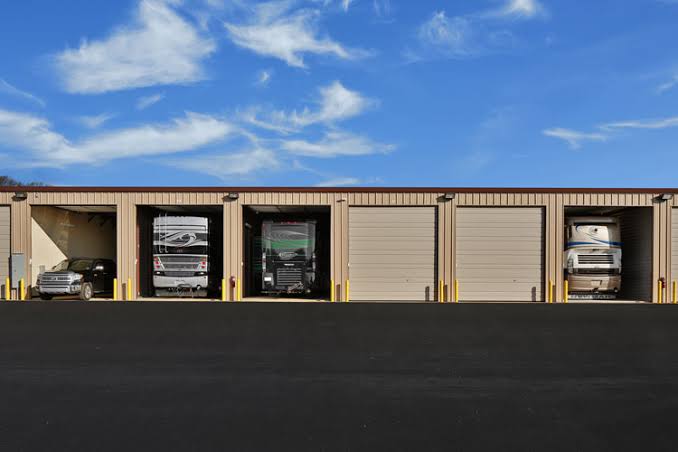

A storage space may look large enough until mirrors, roof equipment, or a tight turning angle enter the picture. RV clearance depends on more than the vehicle’s listed length and height. Accurate measurements help owners avoid contact with doors, posts, ceilings, curbs, and nearby vehicles while using RV storage.
Overall Vehicle Height Includes More Than the Roofline
Factory specifications may not reflect the RV’s true height after accessories are installed. Air conditioners, antennas, satellite dishes, solar panels, vents, roof racks, and raised suspension components can add several inches above the main roof.
Owners should measure from level ground to the highest fixed point while the vehicle is loaded as it normally would be. Tire pressure, suspension condition, and cargo weight can slightly change that reading. Extra overhead room also helps account for ramps, uneven pavement, and movement while entering covered RV storage units.
Door Openings May Be Smaller Than the Interior Space
An enclosed bay can have enough room inside while still presenting a narrow or low entrance. Door tracks, framing, weather seals, locks, and roll-up mechanisms may reduce the clear opening beyond what the outside dimensions suggest.
Drivers need the usable width and height with the door fully raised. Mirrors, awnings, ladders, and trim should pass without scraping either side. A few inches of margin makes entry safer than choosing a space that matches the RV almost exactly.
Mirrors and Slide-Outs Change the Required Width
Side mirrors often extend well beyond the body, especially on Class A motorhomes and larger tow vehicles. Folding them inward may reduce width, although owners should confirm that they lock securely and still clear nearby walls.
Slide-outs require separate attention if the owner plans to open them during maintenance, cleaning, or loading. Storage rules may prohibit extending slides because they block neighboring spaces or traffic lanes. Measuring both travel width and fully opened width prevents confusion after move-in.
Turning Radius Can Limit Access Before the RV Reaches the Space
Long vehicles need room to swing their front and rear ends during a turn. Narrow drive aisles, sharp corners, gate posts, landscaping, and parked trailers can make a suitable space difficult to enter.
Wheelbase and rear overhang affect how the RV tracks through a corner. A long rear section may swing toward a fence or post while the front moves the opposite way. Visiting the facility with the vehicle, rather than judging from photos alone, gives the clearest view of actual maneuvering room.
Trailer Length Should Include the Hitch and Rear Accessories
Advertised trailer length sometimes refers only to the body or floor plan. Tongues, couplers, spare tires, cargo racks, bike carriers, ladders, and rear-mounted equipment may add several feet.
Tow vehicles also need enough space to straighten the trailer before backing. Disconnecting safely requires room around the hitch, safety chains, electrical plug, and jack. Owners comparing RV storage units should measure the complete parked setup instead of relying on the model name.
Ground Clearance Matters on Slopes and Transitions
Low steps, stabilizers, plumbing, generators, exhaust parts, and leveling equipment can scrape where flat pavement changes to a steep ramp. Driveway crowns, drainage channels, speed bumps, and gate tracks may also reduce clearance beneath the RV.
Approach and departure angles become more important as wheelbase and overhang increase. A surface that works for a short camper may cause a longer motorhome to drag. Slow entry and a spotter can help identify trouble before contact occurs.
Roof Supports and Interior Features Reduce Usable Height
Covered parking structures may include beams, braces, lights, cameras, gutters, or signs below the main roof. Enclosed spaces can also contain sprinklers, door hardware, or ceiling fixtures that sit lower than expected.
Clearance should be checked across the entire route, not only at the entrance. An air conditioner might pass under the front edge but approach a lower support farther inside. Owners should also keep rooftop equipment clear of anything that could rub during wind or suspension movement.
Space Around the RV Affects Everyday Access
Enough clearance should remain for opening doors, storage compartments, engine panels, and utility hatches. Tight side spacing can make battery checks, tire inspections, and routine loading difficult even when the RV technically fits.
Walking room also supports safer maintenance. Owners may need to reach valve stems, connect a charger, inspect seals, or remove belongings without pressing against another vehicle. A wider space can be worthwhile for RVs that receive regular attention during storage.
Gate Width and Entry Angle Influence Arrival
Facility gates need enough room for the RV and tow vehicle to pass without clipping posts, keypads, curbs, or fencing. A wide opening may still feel narrow when the road approaches it at an angle.
Keypad placement can affect access because drivers may need to stop close enough to enter a code. Long combinations sometimes require backing or repositioning after the gate opens. Daylight visits allow owners to study the entry path before attempting it in poor weather or low light.
Marked Space Dimensions Need a Safety Margin
Painted lines show the assigned area, but they do not always account for mirrors, slide toppers, awnings, or neighboring vehicles. Wind, uneven parking, and small steering corrections can further reduce the available gap.
Leaving extra room lowers the chance of contact during entry and exit. Storage Partner features covered and secure RV storage for motorhomes, travel trailers, fifth wheels, and other recreational vehicles. Customers can compare available RV storage units, access routes, and clearance dimensions to find a space that fits the full vehicle rather than its basic factory measurements.