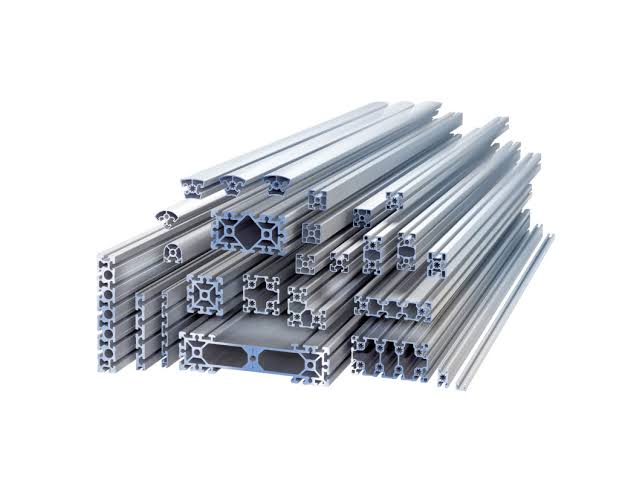

Reliable frame design starts with knowing how much weight the structure can support without bending, loosening, or becoming unstable. Load capacity depends on more than profile size because span length, connection type, force direction, and mounting conditions all affect performance. Careful evaluation helps an aluminum framing kit carry equipment safely without adding unnecessary material.
Start With the Weight the Frame Must Support
Designers first need the total operating load, including equipment, shelves, panels, tools, products, cables, and accessories. Static weight may appear simple, but uneven placement can put far more force on one rail or joint than another. Concentrated loads from motors, tanks, fixtures, or control cabinets deserve separate attention because they do not spread across the structure evenly. Unexpected additions should also be included. Operators may place parts on a workstation, maintenance teams may lean against a guard, or future equipment may increase the original weight. A practical safety allowance gives the T slot extrusion assembly room to handle normal changes without operating near its maximum limit.
Profile Geometry Controls Resistance to Bending
Cross-sectional shape has a major effect on stiffness. Wider or deeper profiles usually resist bending better than smaller sections, especially when the taller dimension faces the direction of the load. Internal ribs, wall thickness, and open-slot geometry also influence how the aluminum framing material performs under stress.
Published technical data often lists the moment of inertia for each profile. Engineers use that value to estimate how much a rail may deflect over a given span. MiniTec extruded aluminum framing includes several profile sizes, allowing builders to select a section based on calculated performance rather than appearance alone.
Longer Spans Reduce Load Capacity
Distance between supports strongly affects how much weight a horizontal member can carry. A short beam may hold a substantial load with little movement, while the same profile can bend noticeably across a longer opening. Adding a center support often improves performance more efficiently than replacing the rail with the largest available option. Deflection matters even when the profile remains far from breaking. Excessive movement may throw sensors out of alignment, cause doors to drag, make work surfaces feel unstable, or interfere with conveyor tracking. Proper T slot aluminum extrusion selection therefore considers acceptable bending as well as material strength.
Load Direction Changes How the Profile Performs
Vertical compression, horizontal bending, twisting, and pulling forces affect a frame in different ways. Upright columns often carry weight well, yet tall unsupported posts may buckle or sway under side pressure. Cantilevered arms create added stress at their connection points because the load sits away from the main support. Orientation can improve capacity without changing the profile. Rectangular extruded aluminum T slot rails usually resist bending better along their deeper axis. Rotating the member or adding a brace may solve a stiffness problem while keeping the overall design compact.
Connections May Limit the Entire Assembly
Strong profiles cannot compensate for weak joints. Brackets, fasteners, joining plates, and internal connectors transfer force between rails, so their ratings matter as much as the aluminum sections. Loose hardware or undersized connectors can allow movement long before the profile reaches its load limit.
Corner design also affects rigidity. A single small bracket may suit a light cover, while a machine base may need larger plates, gussets, or multiple fasteners at each joint. MiniTec Aluminum Framing offers various connection methods that can match different structural and access requirements.
Floor Mounting and Base Stability Need Review
Anchoring determines whether the assembled frame stays upright under normal use. Leveling feet may support vertical weight, but they do not always prevent tipping, sliding, or rocking. Floor plates and anchors become more important for tall structures, heavy doors, cantilevered equipment, or frames exposed to impact.
Base width should match the frame’s height and center of gravity. Heavy components placed near the bottom improve stability, while equipment mounted high can increase overturning force. Mobile assemblies require properly rated casters and a wheel pattern that remains stable during movement and braking.
Dynamic Forces Raise the Real Load
Moving equipment creates forces beyond its listed weight. Conveyors, actuators, robotic devices, drawers, and rotating machinery may add vibration, impact, acceleration, or repeated cycling. These conditions can loosen fasteners and place alternating stress on profiles and joints.
Repeated loading also introduces fatigue concerns. A frame that supports a stationary cabinet faces different demands than one carrying a machine that starts and stops thousands of times. Engineers should account for operating speed, motion direction, cycle frequency, and sudden stops before approving the structure.
Panels and Accessories Affect Structural Behavior
Guarding panels can add stiffness, but builders should not assume they act as structural braces unless the design specifically uses them that way. Polycarbonate, wire mesh, and sheet panels may also transfer wind, impact, or door forces into the surrounding frame. Hinges and latches place repeated loads on nearby posts, especially around wide or heavy doors.
Mounted accessories change weight distribution as well. Shelves, monitor arms, cable trays, and control boxes can create twisting forces when attached to one side. Balanced placement and added cross members help the aluminum framing kit remain square during use.
Calculations Should Be Confirmed Before Fabrication
Engineering formulas can estimate stress and deflection, though the results depend on accurate load information and correct boundary conditions. Manufacturer data, connector ratings, and profile properties should support those calculations. Physical testing may also be appropriate for unusual frames, high-cycle equipment, or applications where failure could cause injury.
Final approval should consider the full assembly rather than one profile in isolation. MiniTec Solutions supplies MiniTec Aluminum Framing, matching hardware, and modular components that help manufacturers build frames around real load, span, movement, and mounting requirements instead of relying on rough estimates.